



Archive for the ‘How’ Category

The Joy of Doing Nothing

Friday, April 12th, 2013
Charles Coiner, Give It Your Best, poster, 1942

Charles Coiner, Give It Your Best, poster, 1942

The problem with effort and good design is that the best solutions looks like they takes very little work. The solution appears natural and effortless. The worst work are the solutions that are over-designed, over-produced, over-wrought, and desperate. But, civilians will look at the ABC logo and say, “So what? What took so long? I could have done that.” The logo that is an illustration of a person with raised hands on top of a globe with all nations color coded and series of stars that wraps around the globe, sitting on a word mark of tortured typography is praised, “Boy that must have taken a long time.”

Charles Coiner’s World War II poster, Give it Your Best, is one of these examples. It’s so obvious and straightforward that it appears that no design happened. But, the poster leaves nobody guessing at the message, is visually aggressive and powerful, and stands the test of time. Works for me.

And while we’re on the subject of World War II posters, I can’t resist discussing the series, This is Your Friend. These posters were created to help our troops understand what our allies looked like so we wouldn’t shoot them. The Chinese were our allies; they were not Japanese who were our enemies. The English,and Australian men wore these specific hats and were not German. I like that they try so hard to make clear what could be difficult; if someone was caucasian and blonde were they German? Not if they had a smile and tam-o-shanter hat. They were clearly Canadian.

But the poor Dutch. Why only a Dutch sailor? If they weren’t sailors and Dutch were they dangerous? And I don’t want to sound mean, but couldn’t the War Office find a strapping young and handsome Dutch man? I’m pretty sure there were other options here. If a student tuned this in I would say, “You need to stop using Google as a research tool and using low resolution bad images.”

WWII Canadian poster, 1942

WWII Canadian poster, 1942

WWII Russian poster, 1942

WWII Russian poster, 1942

WWII Ethiopian poster, 1942

WWII Ethiopian poster, 1942

WWII Dutch Sailor poster, 1942

WWII Dutch Sailor poster, 1942

WWII Australian poster, 1942

WWII Australian poster, 1942

WWII English poster, 1942

WWII English poster, 1942

WWII Chinese poster, 1942

WWII Chinese poster, 1942

Sideways

Tuesday, April 9th, 2013
Gan Hosaya, 1969, ad

Gan Hosaya, 1969, ad


There are times when a project just looks bad, like dog crap. I slave over it endlessly, and then I realize all it needs is to be turned on its side or upside down. Voila, it works. That’s the issue when you don’t print anything out and only see it on a screen. Sure you can turn your screen upside down or turn it on its side, but that could result in dropping it. The easiest solution is to send a file to print and than flip that baby around in all directions. What was once banal and expected becomes avant-garde and unsettling.

I love work that is sideways or upside down. It gets away from the standard point of view that we have in everyday life which is straight on from about 5 or 6 feet tall. Miraculously, you can see a different view from above or below, or lying on the ground and seeing the world on its side. This is why God gave people bendable joints. Photography at the Bauhaus in the 1920s and 30s took advantage of this ad-nauseum. It was as if everyone there was climbing up the walls and hanging from the balconies. But the images are wonderful.

Posters and ads with moving vehicles are especially adaptable to this technique. Gan Hosaya‘s 1969 poster for Yamaha is one of my absolute favorite pieces of design ever produced. Think how dull it might have been if he simply let the image be turned 90 degrees. So the next time you’re out taking photos, climb up on a table and shoot everyone from above. You’ll be asked to leave, but end up with a snappy photo that isn’t the same head and shoulders of someone holding a drink.


Martin Munkasci, 1935

Martin Munkasci, 1935

Diving at the Valley Baths, Brisbane, Queensland, 1938

Diving at the Valley Baths, Brisbane, Queensland, 1938

Paul Rand, Apparel Arts cover

Paul Rand, Apparel Arts cover

Herbert Matter, 1935

Herbert Matter, 1935

Carl Ally Agency, ad, 1960s

Carl Ally Agency, ad, 1960s

Carl Ally Agency, ad, 1960s

Carl Ally Agency, ad, 1960s

Max Huber, 1957

Max Huber, 1957

Max Huber, 1948

Max Huber, 1948

Joseph Binder, Graphis magazine, 1948

Joseph Binder, Graphis magazine, 1948

Laszlo Moholy-Nagy, 1926

Laszlo Moholy-Nagy, 1926

The Joyous Ecstasy of Wrongness

Wednesday, February 6th, 2013

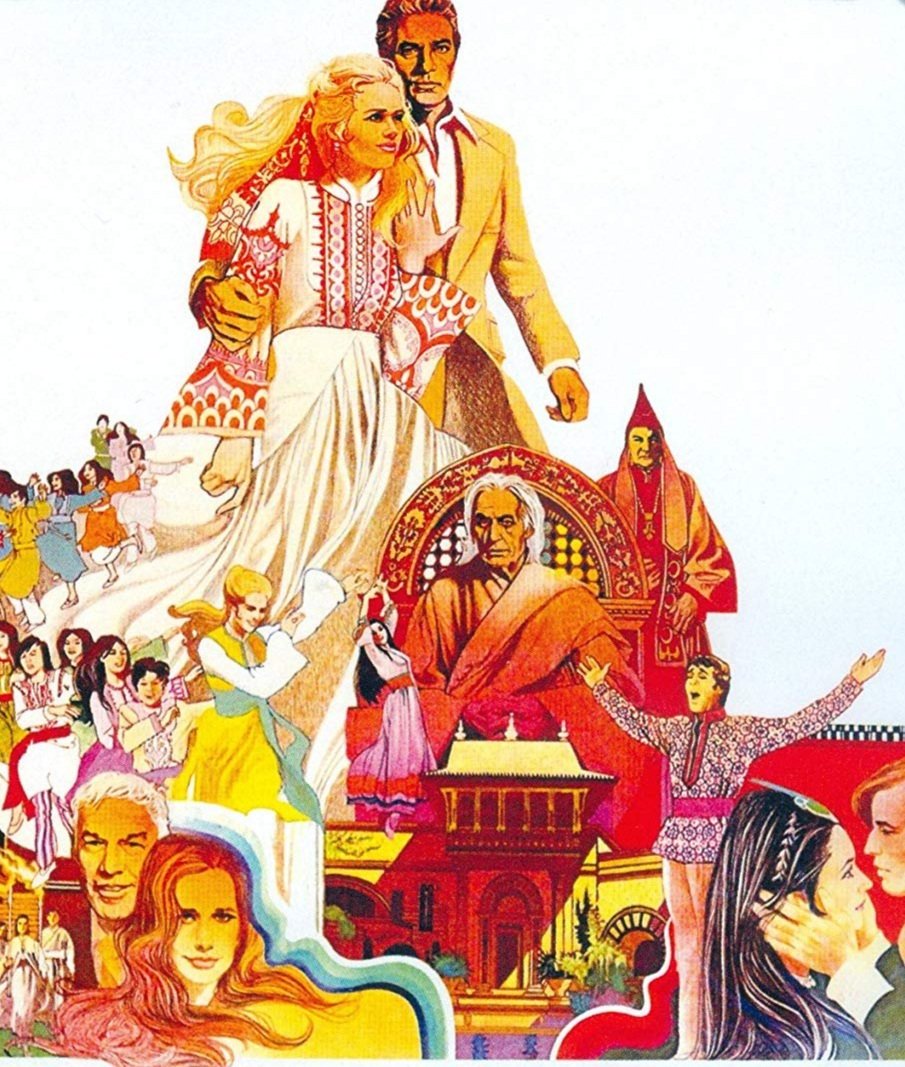
Where It's At, poster, 1969

At times I feel like a traitor. I hate design. I drive to work and see a cool and hip poster and think, “Oh, yeah, seen that a thousand times.” I’ll work on an identity and create an incredibly clever solution such as when a “P” is also cat, or a comma, or a flying nun. I want to throw up.

This is when I realize its time to forget logic, clever solutions, puns, and the “correct” approach. And I do something really wrong. Now, what is wrong? Of course, hurting others emotionally is wrong (or so I’ve been told). In design, it seems that the wrong thing to do is to forget the rules and do something wonderful that makes no sense. Some of you are already getting angry and thinking, “Damn, damn, damn, well that’s just art.” See, it’s wrong.

One of my favorite examples is the campaign for the movie Where It’s At from 1969. I haven’t seen this movie and I have no desire to see it. But the posters are really, really, really bizarre. The designer took the psychedelic approach and teamed it with PushPin, children’s board game graphics, and European “Art” film (code for topless) imagery. These posters have everything one could want in a poster. Forget the poster solution of a clever one color solid shape of a comb that is also a crucifix; this is the joyous ecstasy of wrong.

Where It's At poster, 1969

Where It's At one sheets, 1969

Sweeter than Sweet

Wednesday, January 30th, 2013

Conniff Up_Up_And_Away

I truly think I’m losing my mind. Yesterday, I stumbled across the Ray Conniff Singers. Of course, I have a few Ray Conniff albums. Who doesn’t? But I never knew about the singers. First, the album covers are a symphony of blurry women. Each cover employees the lovely gauze filter that was popular for high school senior portraits when I was eighteen. I think it’s time this style returns to fashion. I don’t know why everyone is blurry. I understand watching Dynasty and the screen goes extremely soft when Joan Collins appears. The blurry effect is a good way to hide old age. Nobody would guess she isn’t twenty-two. The Ray Conniff album women are young, so that doesn’t apply. Perhaps they were embarrassed and requested a soft focus for recognition issues.

Second, the music. I thought I knew sweet and saccharine. I consider myself rather an aficionado of square and unhip, but this music transcends even my expertise. Their rendition of Up, Up, and Away is alarmingly nice and happy. It’s truly sickening and could drive sane people to torture. It is, however, a wonderful tool with teenagers. If you have one, or two, play this in the car when driving them around. Insist on singing along if friends are there also. This is a sure fire way to help any teen step away from the dark side and become pleasant.


American Beauty

Monday, January 21st, 2013

Massimo Vignelli, American Airline identity, 1967

Several years ago, VH1 changed their logo. We designed the previous one. The mark we created wasn’t flashy or wildly exciting. It was a simple and clear identifier. We added the words Music First into the mark to remind the audience, internal and external, that VH1 was about music, not Gallagher specials. The solution worked, the network had clarity and focus. Ratings increased dramatically, not because the logo was good, but because the new programming was great. Like Paul Rand said, “A good logo can never make a bad product good. But it can make a good product spectacular.”

When the next iteration of the logo (after ours) was launched, several magazines asked for my opinion of the new one. At the time, I answered diplomatically, “I don’t know the business reasons or criteria for the change, so I can’t comment on the success or failure of the new version.” Well, that was dumb. Now a decade later, I look at the backwards 1/leaf version and can say, “WTF? Ugly.”

American Airlines just changed their identity. I appreciated Massimo’s honesty about the redesign, and I agree. Massimo’s mark is simple, clear, and timeless. It will be relevant another 50 years from now. Why does every corporation now think they need a logo that looks like a internet company in 1999? Most importantly, however, is the fact that the tens of millions of dollars spent on implementation could have been used to save and create jobs. Our role as designers is to help our clients succeed. This means they keep employees, hire people, expand, and provide higher wages. Something shiny and new will never be better than that.

Massimo Vignelli, American Airline ID, 1967

Massimo Vignelli, American Airlines logo, 1967

Futurebrand, American Airlines logo, 2013

Futurebrand, American Airlines logo, 2013


AdamsMorioka, VH1 logo, 1998

The post AdamsMorioka VH1 logo