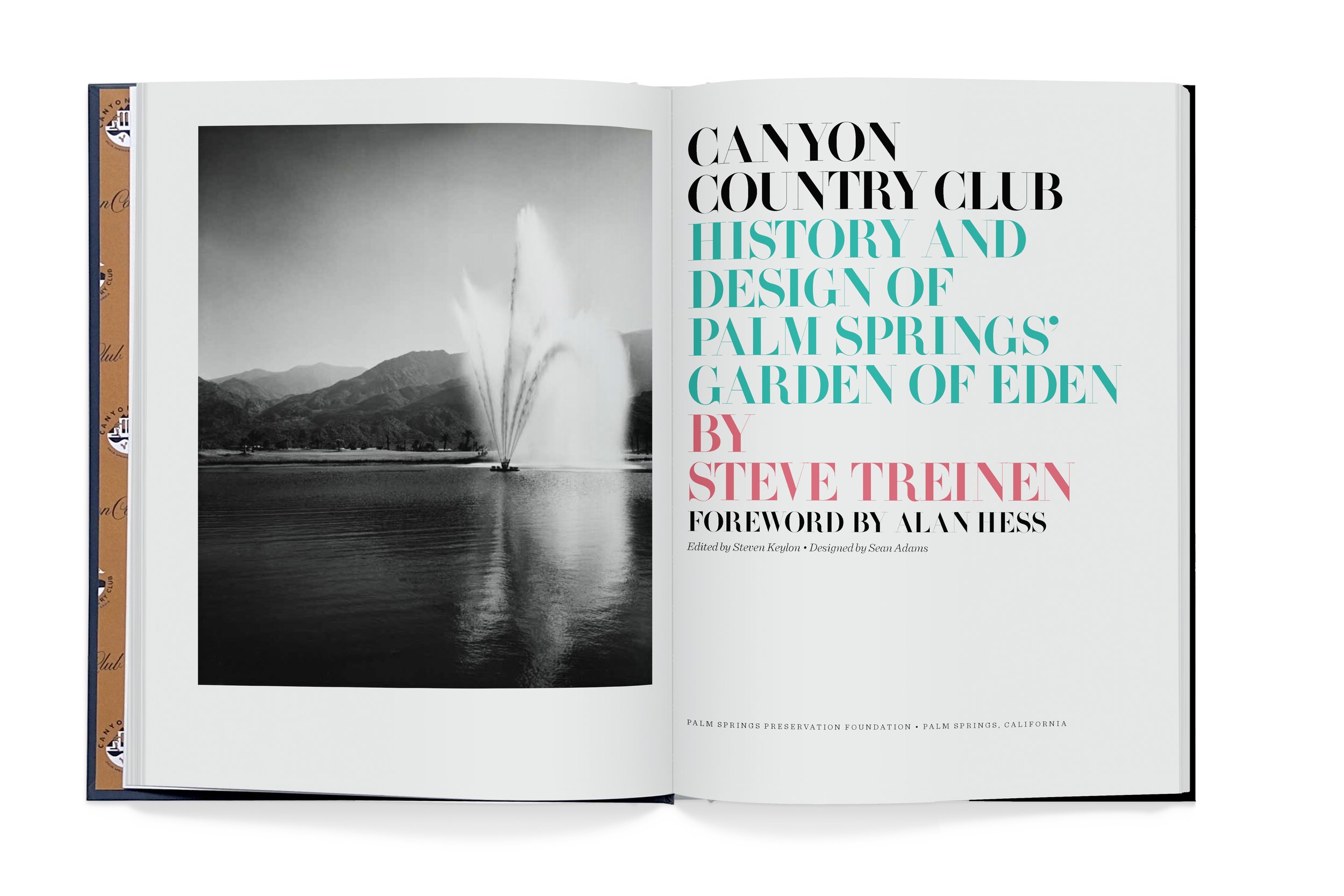
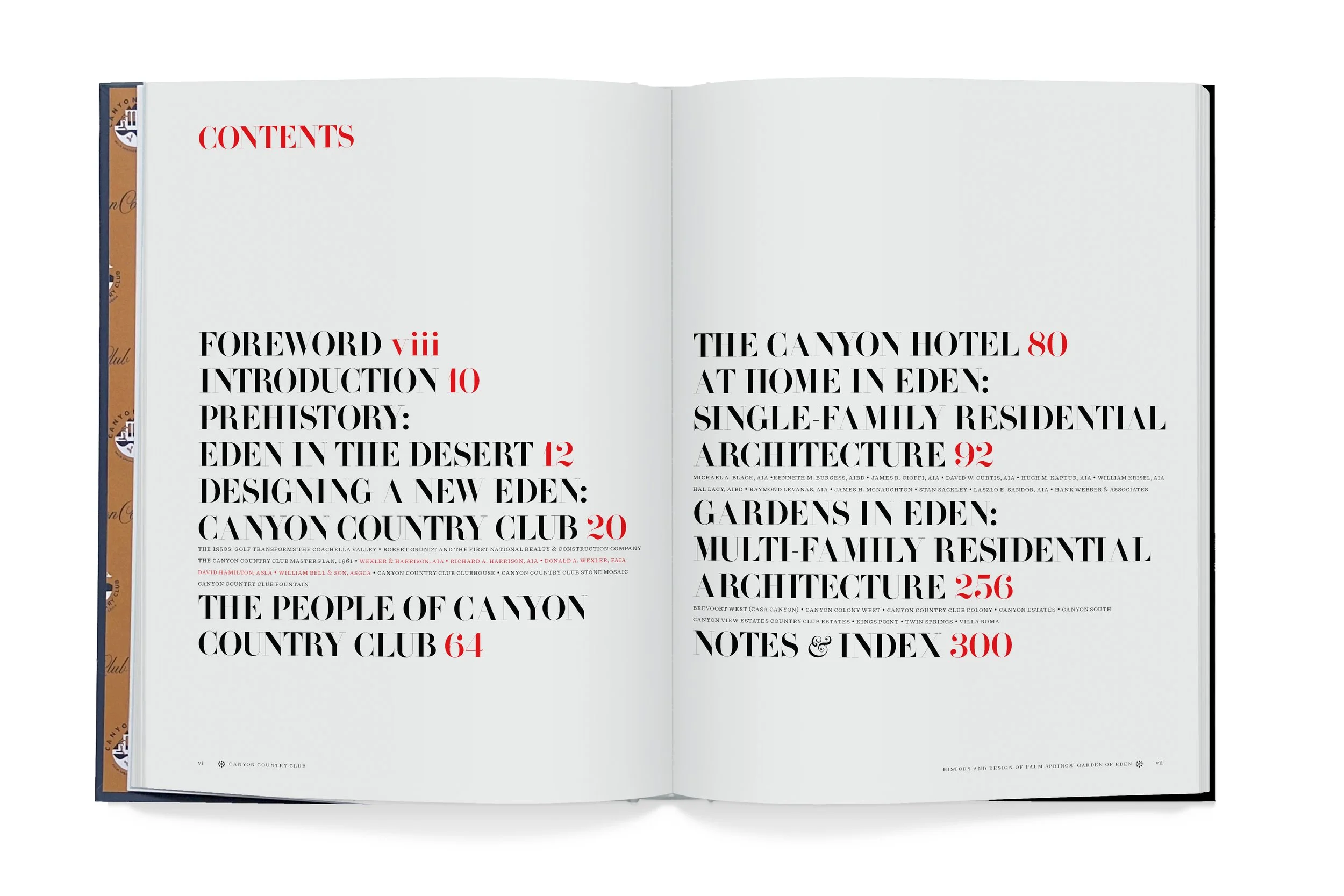
Canyon Country Club: the History and design of Palm Springs’ Garden of Eden
By Steven Treinen
Edited by Steve Keylon
Introduction by Alan Hess
9” x 12”
312 pages
Hardcover with jacket
2025
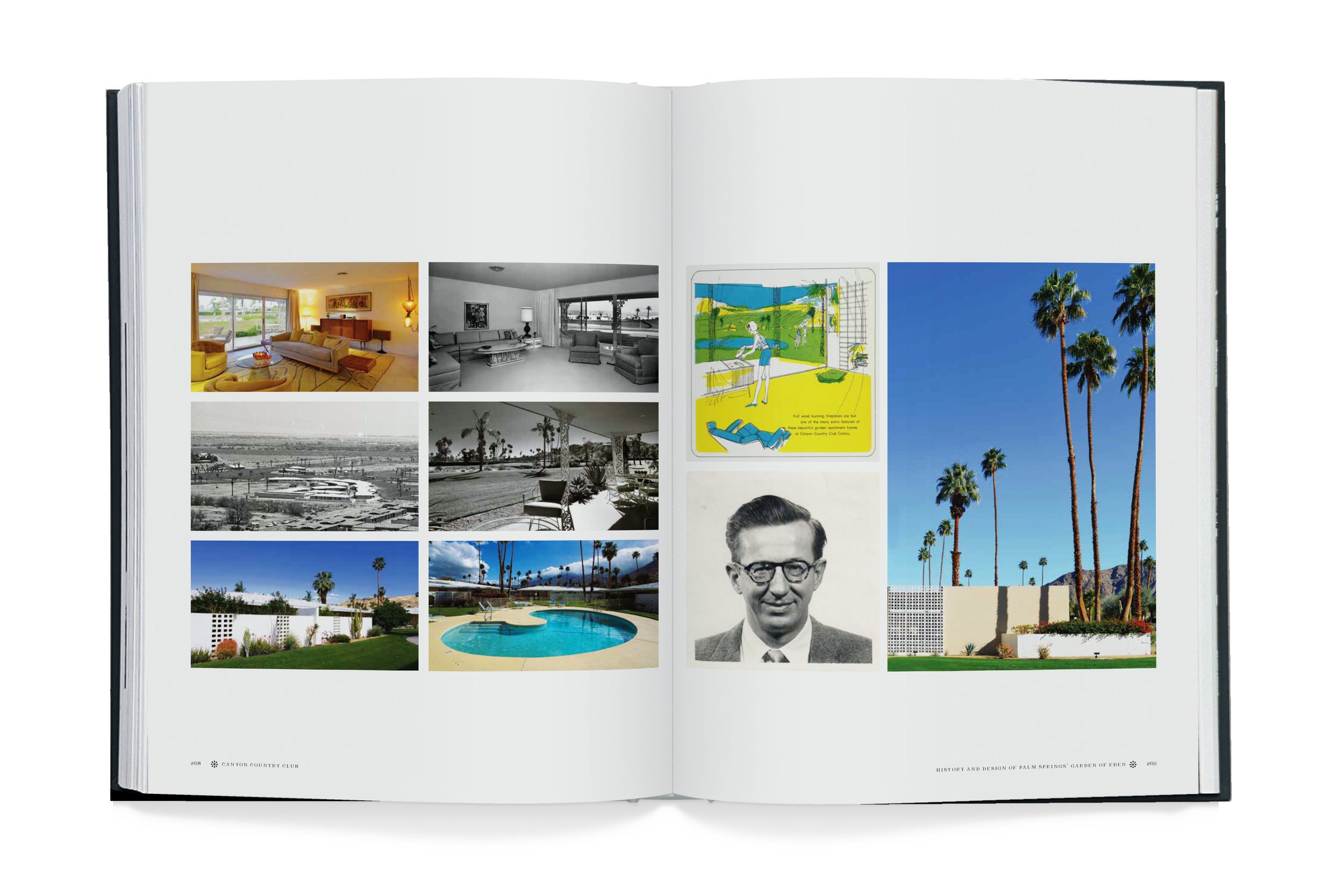
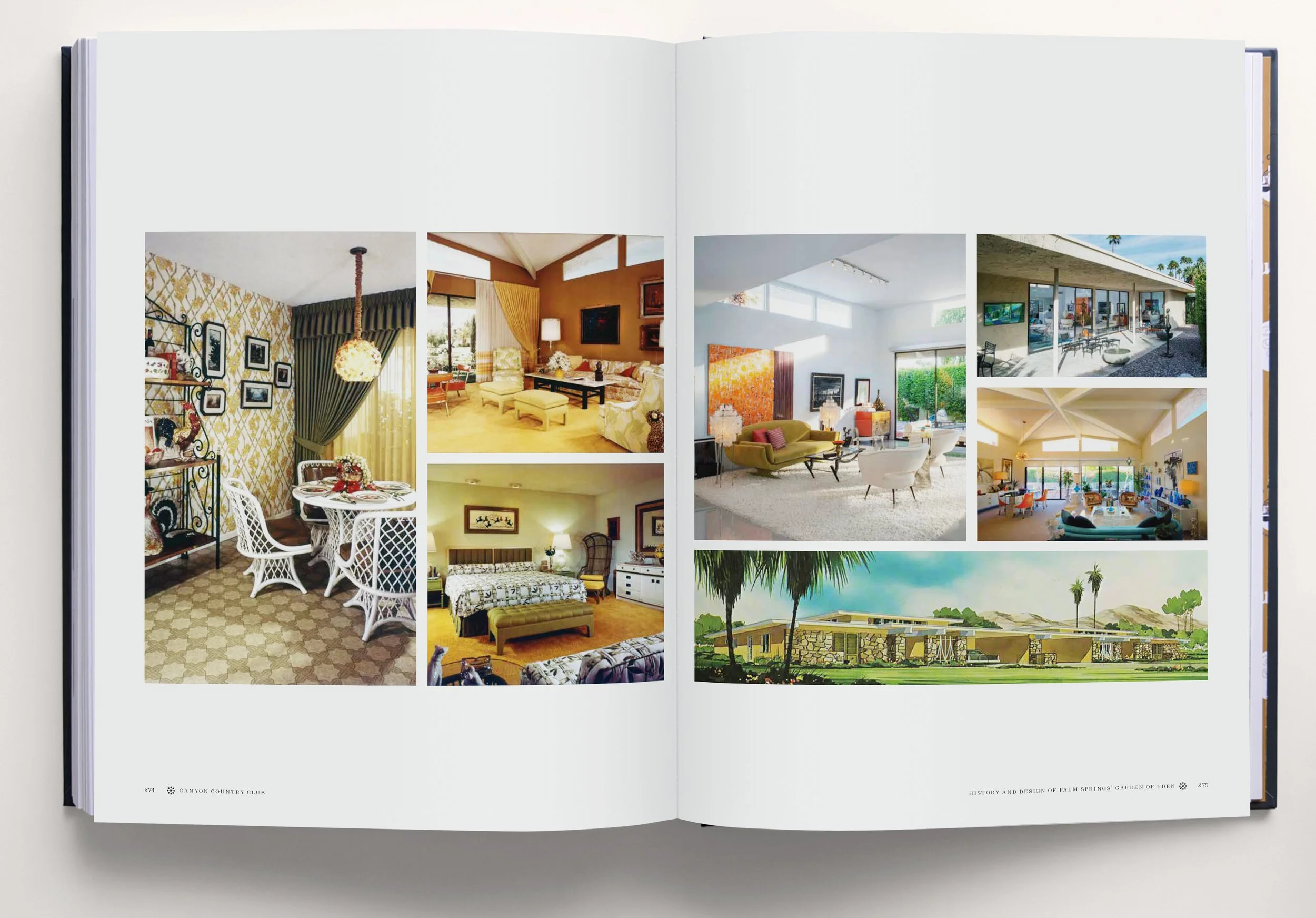
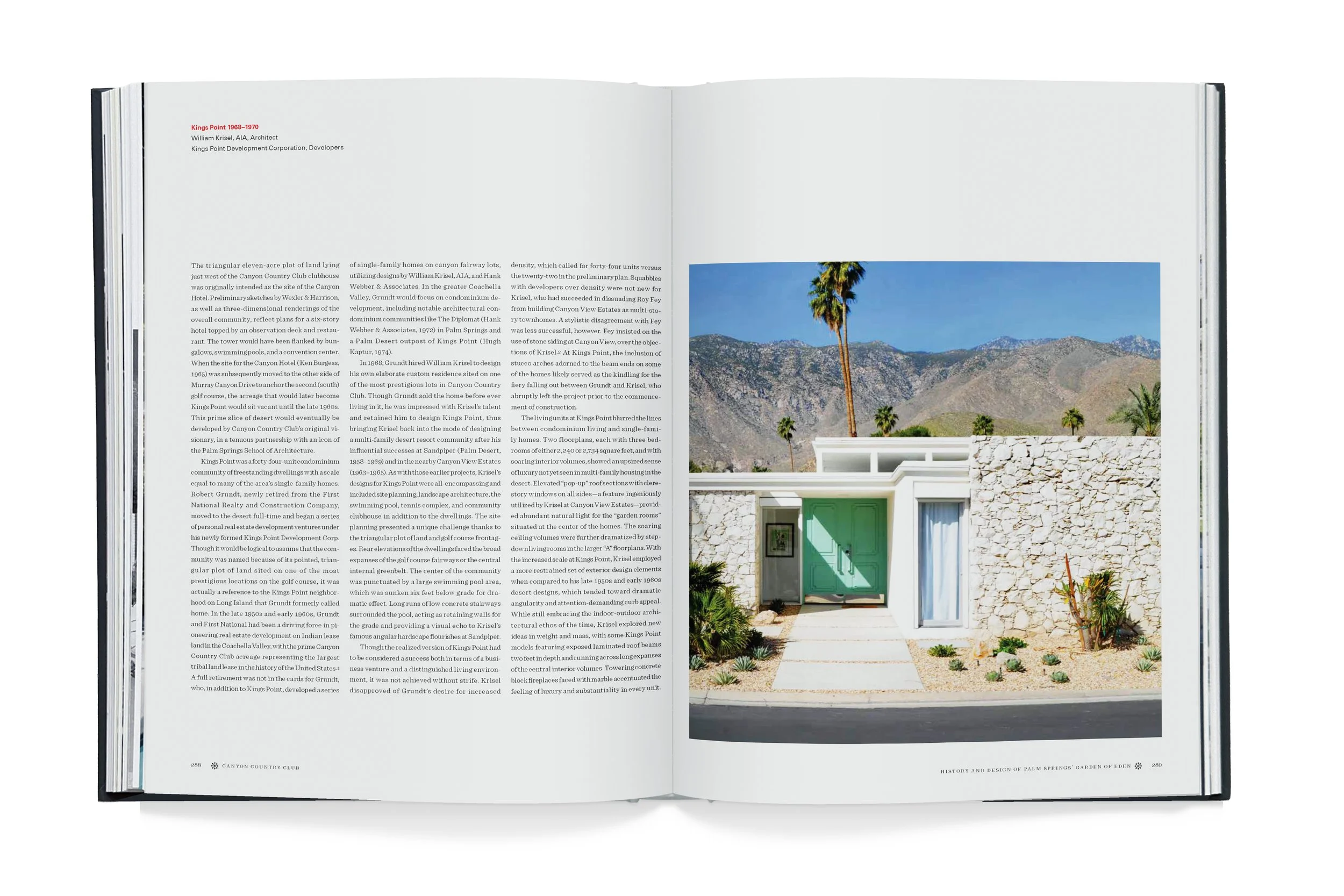
Following President Eisenhower’s landmark signature of legislation in 1959 which permitted ninety-nine-year terms, Canyon Country Club became the largest Indian lease land development in Palm Springs’ history. It was also the city’s answer to the wave of golf-driven, luxury real estate development that had already started the “down valley” migration of investment and population growth. The rise of Canyon Country Club, charted in the master plan by architects Wexler & Harrison, landscape architect David Hamilton, and golf course architects William Bell & Son, adapted new urban planning theory and Garden City principles of community design to the desert.
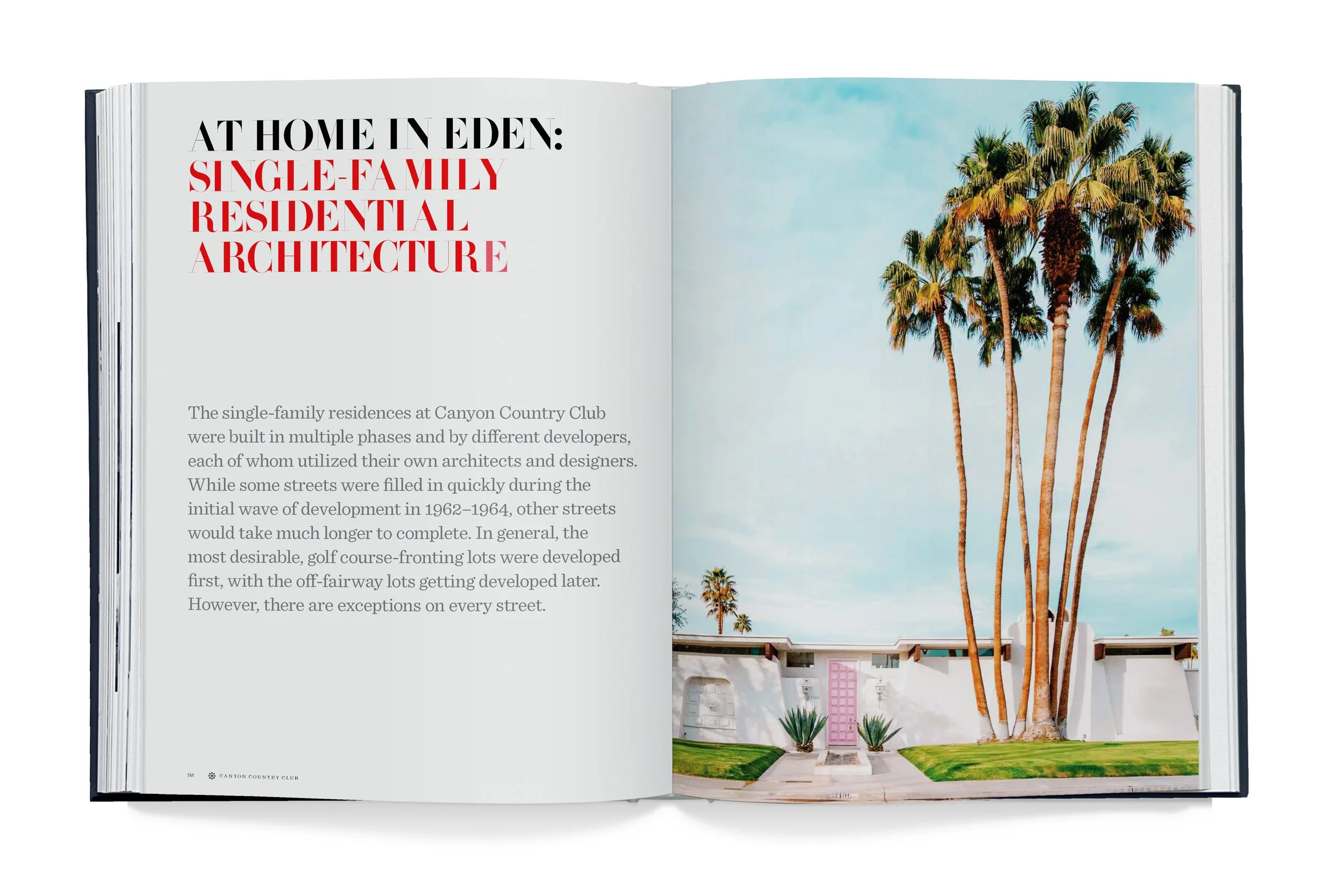
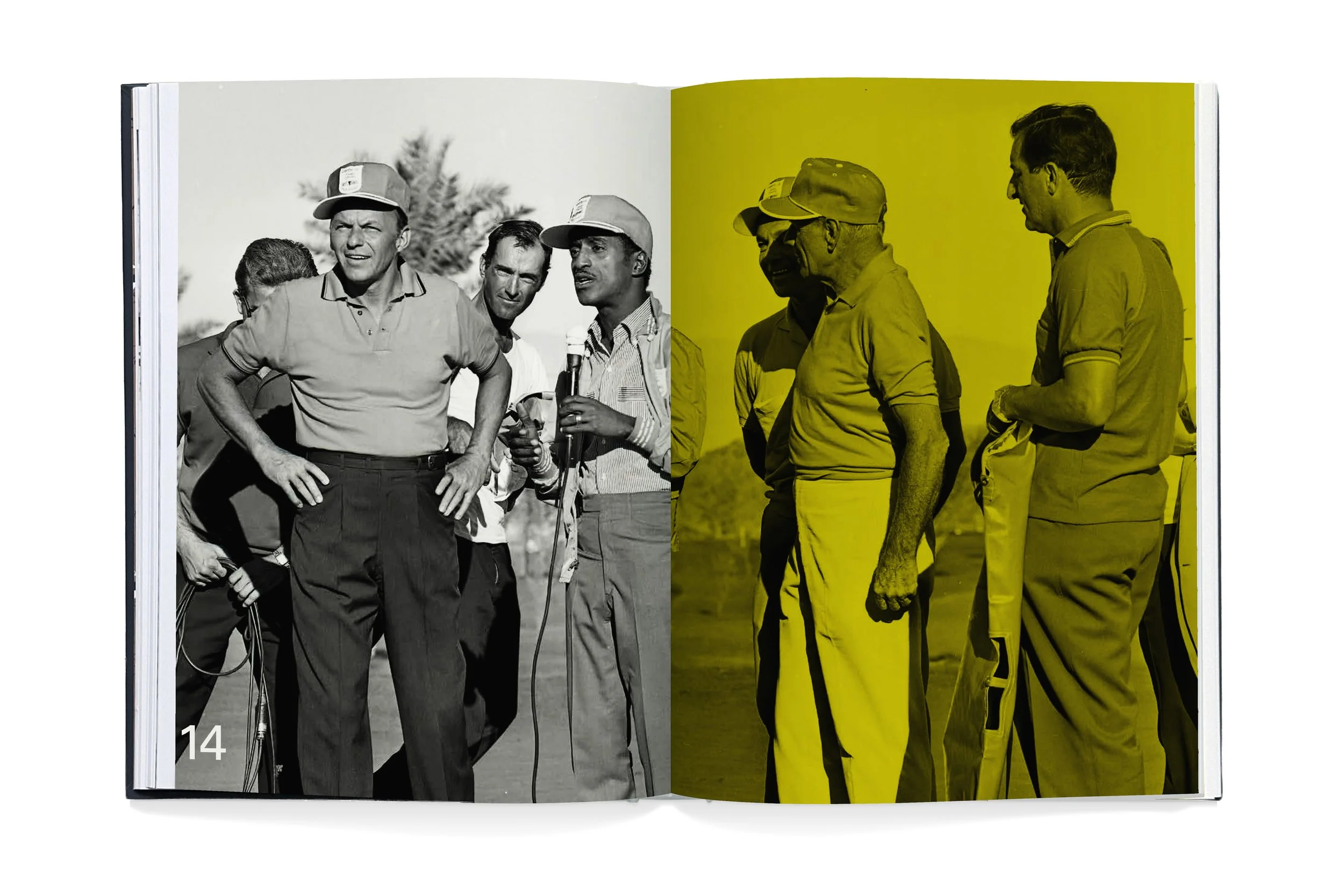
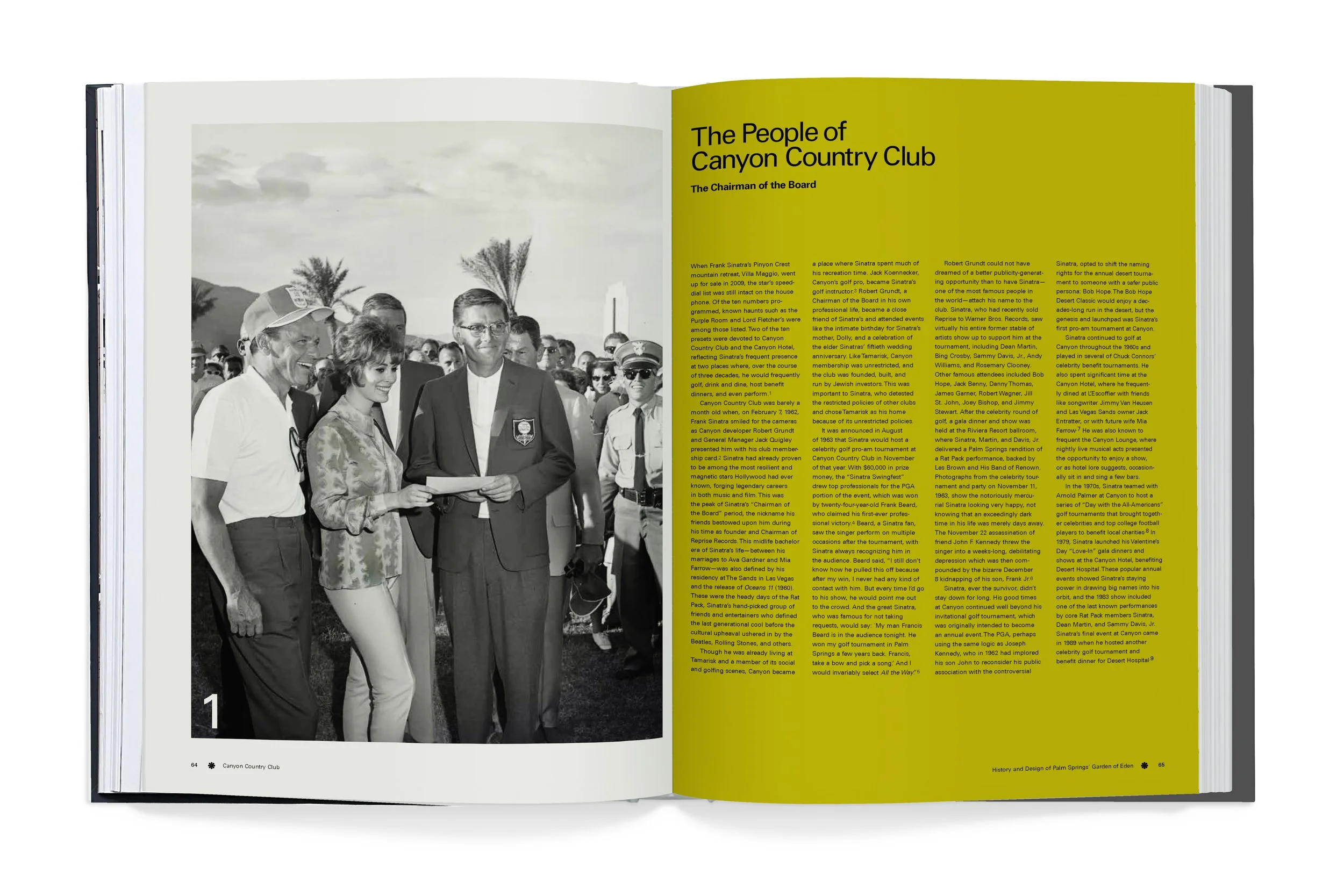
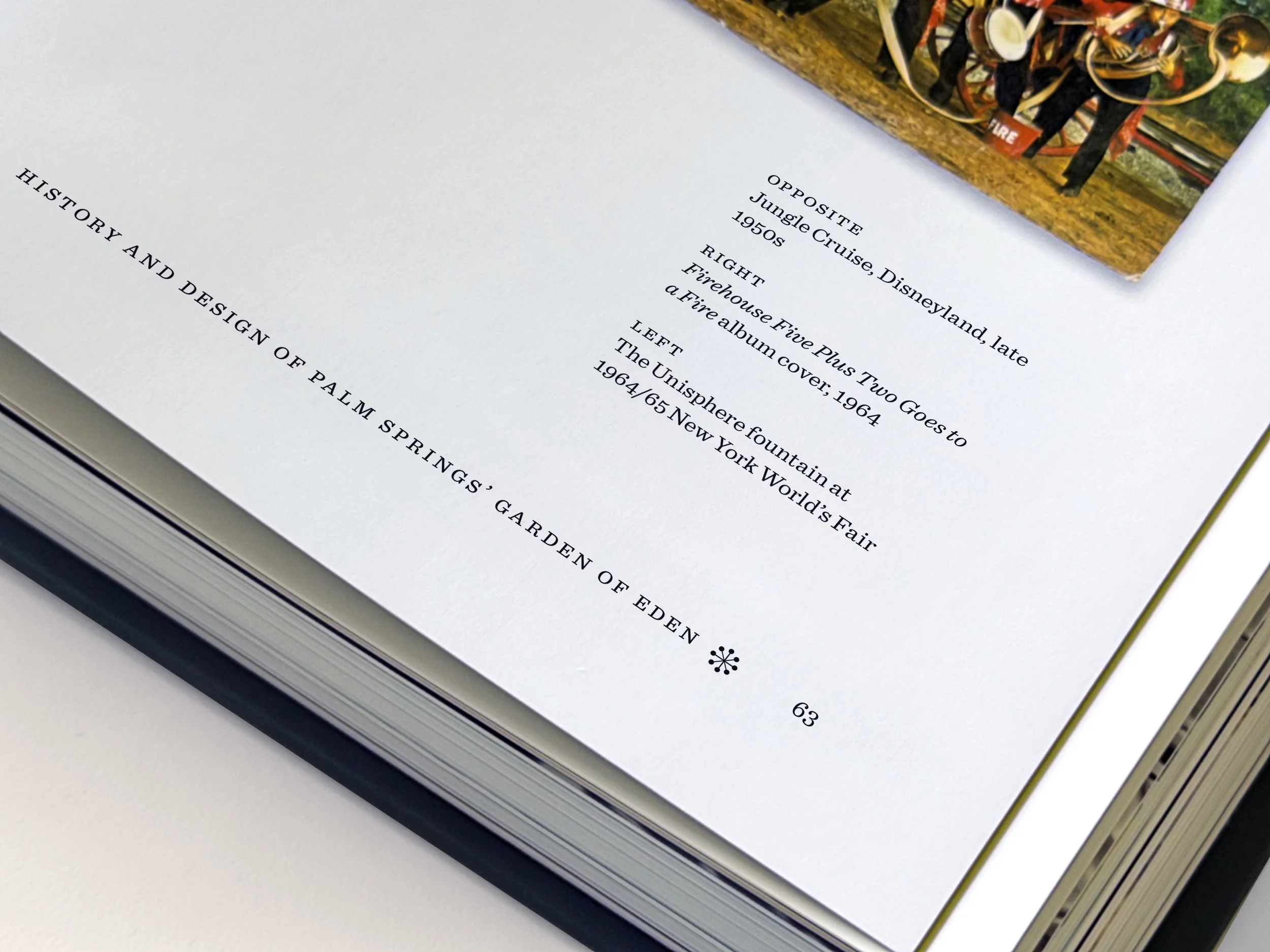
The Indian Canyons development is a landmark of residential 20th-century Bauhaus modernism to late eclectic modernism and integration of regional architecture. The book's design incorporates these themes with rigid Swiss modernist mathematical structure mixed with typographic expressionism of the 1960s using the 1960s CBS version of Firmin Didot, Sentinel as a version of mid-century favorite Clarendon, and Univers as a reference to the 1972 Olympics. Rather than a rigorous modernist color plaette of primary colors, the book incorporates a Palm Springs palette. While the subject matter is popular, this is not a light tourist artifact, but a dense and deeply researched academic book exploring cultural and architectural change.
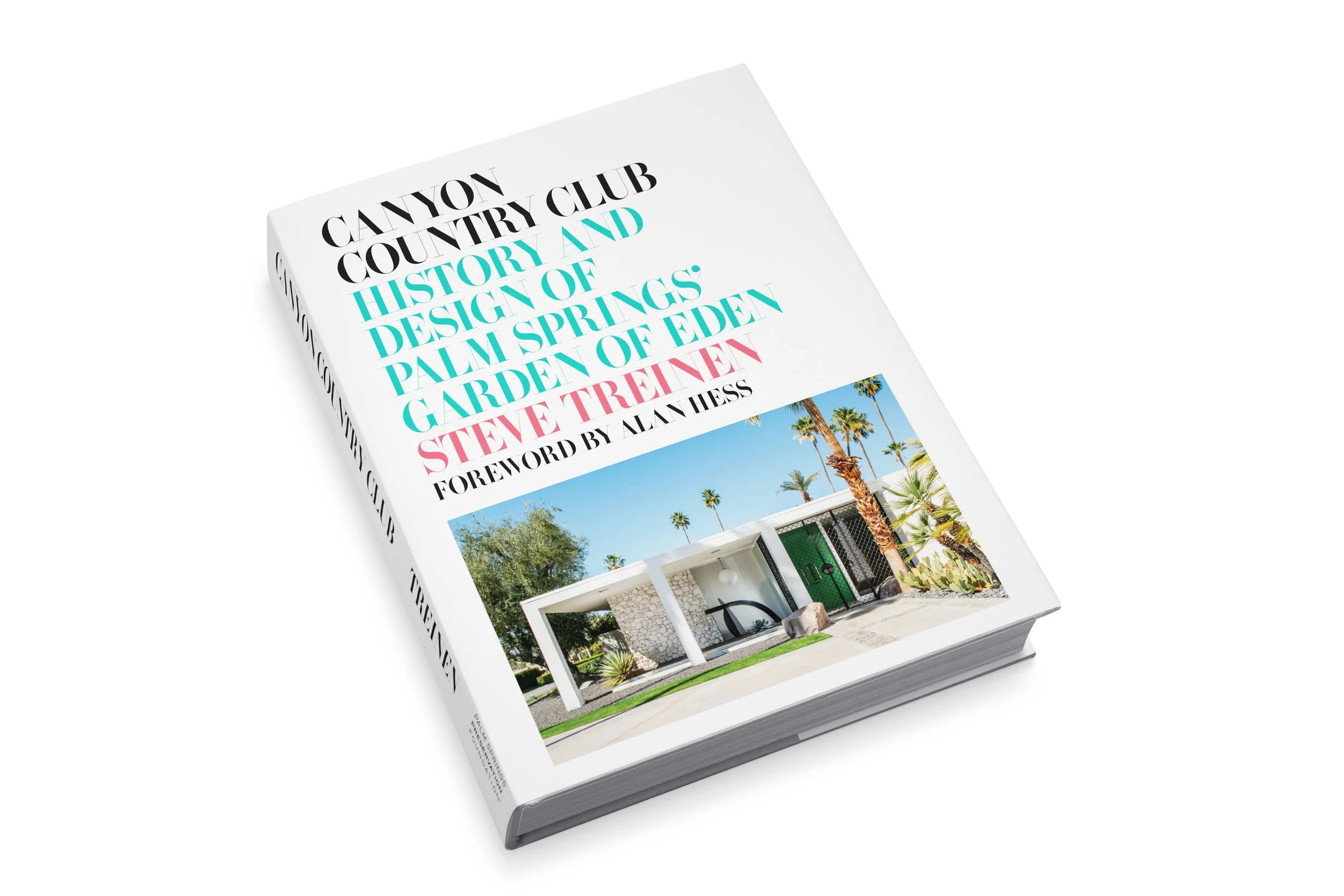
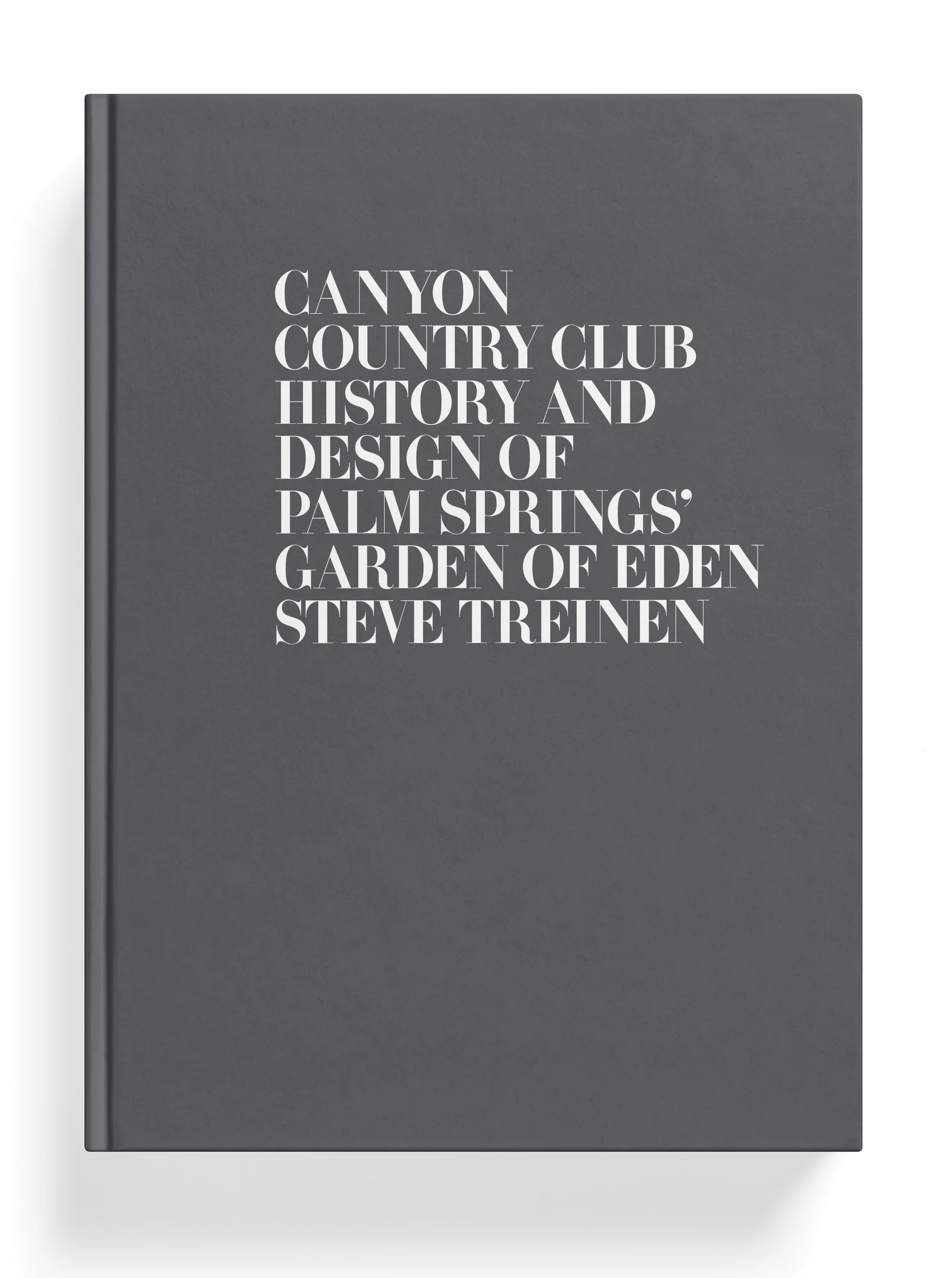
Canyon Country Club cover
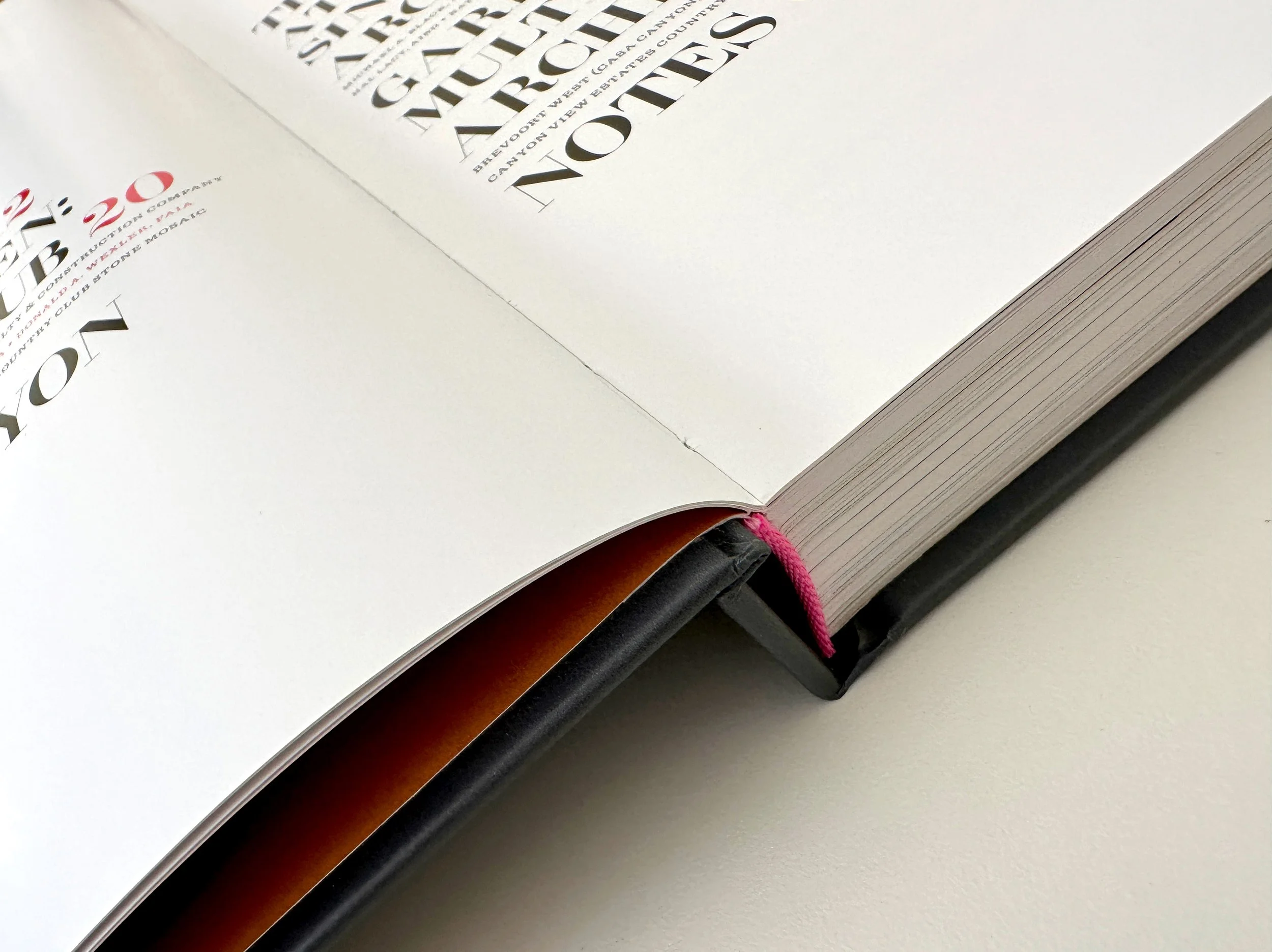
endpaper