









Sweeter than Sweet

January 30th, 2013 by Sean

Conniff Up_Up_And_Away

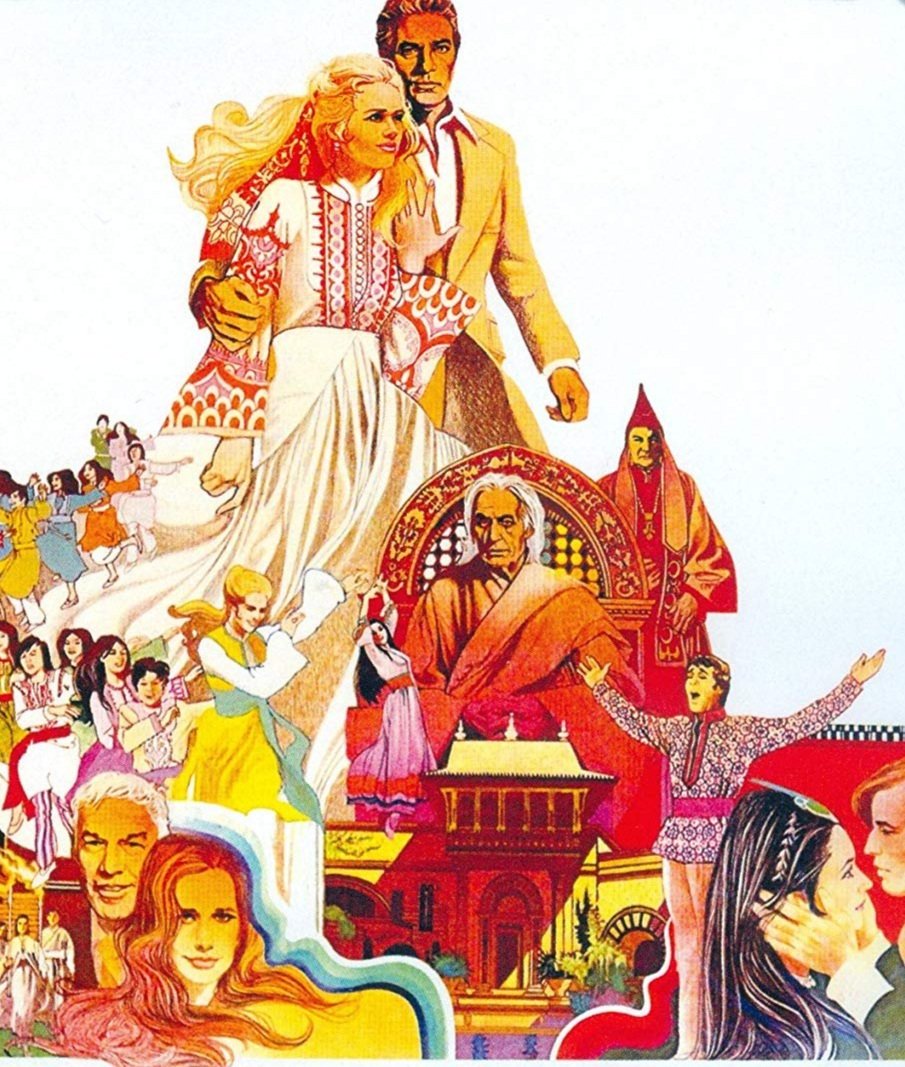
I truly think I’m losing my mind. Yesterday, I stumbled across the Ray Conniff Singers. Of course, I have a few Ray Conniff albums. Who doesn’t? But I never knew about the singers. First, the album covers are a symphony of blurry women. Each cover employees the lovely gauze filter that was popular for high school senior portraits when I was eighteen. I think it’s time this style returns to fashion. I don’t know why everyone is blurry. I understand watching Dynasty and the screen goes extremely soft when Joan Collins appears. The blurry effect is a good way to hide old age. Nobody would guess she isn’t twenty-two. The Ray Conniff album women are young, so that doesn’t apply. Perhaps they were embarrassed and requested a soft focus for recognition issues.

Second, the music. I thought I knew sweet and saccharine. I consider myself rather an aficionado of square and unhip, but this music transcends even my expertise. Their rendition of Up, Up, and Away is alarmingly nice and happy. It’s truly sickening and could drive sane people to torture. It is, however, a wonderful tool with teenagers. If you have one, or two, play this in the car when driving them around. Insist on singing along if friends are there also. This is a sure fire way to help any teen step away from the dark side and become pleasant.


Magic Journeys

January 23rd, 2013 by Sean

Arthur de Wolf, Walt Disney World transit map


I’m a sucker for a nice map. A couple of years ago, I posted about Walt Disney World and Disneyland maps. As a nice by-product, we were then hired to design a new souvenir map for Disneyland. I can’t show this to anyone due to the contract, but believe me, it’s good. A kind follower of burningsettlerscabin recently sent me this remarkable map of Walt Disney World by Arthur de Wolf. Holy cheese and crackers, I am blown away. This is one of those times I find myself saying, “I wish I’d done that.” It’s reminiscent of Massimo’s 1972 New York Subway map. Fortunately it isn’t like the most confusing map I’ve ever used for the Tokyo Subway system. Try to figure that one out. Now I know why I see photos of passengers being shoved into trains in Tokyo. They obviously are all lost and endlessly changing trains to find the way home.


Massimo Vignelli, New York Subway map, 1972

Tokyo Subway map

Tokyo Subway pushers, Shinjuku Station

American Beauty

January 21st, 2013 by Sean

Massimo Vignelli, American Airline identity, 1967

Several years ago, VH1 changed their logo. We designed the previous one. The mark we created wasn’t flashy or wildly exciting. It was a simple and clear identifier. We added the words Music First into the mark to remind the audience, internal and external, that VH1 was about music, not Gallagher specials. The solution worked, the network had clarity and focus. Ratings increased dramatically, not because the logo was good, but because the new programming was great. Like Paul Rand said, “A good logo can never make a bad product good. But it can make a good product spectacular.”

When the next iteration of the logo (after ours) was launched, several magazines asked for my opinion of the new one. At the time, I answered diplomatically, “I don’t know the business reasons or criteria for the change, so I can’t comment on the success or failure of the new version.” Well, that was dumb. Now a decade later, I look at the backwards 1/leaf version and can say, “WTF? Ugly.”

American Airlines just changed their identity. I appreciated Massimo’s honesty about the redesign, and I agree. Massimo’s mark is simple, clear, and timeless. It will be relevant another 50 years from now. Why does every corporation now think they need a logo that looks like a internet company in 1999? Most importantly, however, is the fact that the tens of millions of dollars spent on implementation could have been used to save and create jobs. Our role as designers is to help our clients succeed. This means they keep employees, hire people, expand, and provide higher wages. Something shiny and new will never be better than that.

Massimo Vignelli, American Airline ID, 1967

Massimo Vignelli, American Airlines logo, 1967

Futurebrand, American Airlines logo, 2013

Futurebrand, American Airlines logo, 2013


AdamsMorioka, VH1 logo, 1998

The post AdamsMorioka VH1 logo


Movin’ On Up

January 16th, 2013 by Sean

Sean Adams, AIGA LA, Second Story poster, 2013

I’m heading off to introduce my good friend, Julie Beeler for an AIGA lecture. Now Julie is one of the smartest people I know. She’s cracker-jack fast and makes me feel like a low grade somnambulist moron. So the idea of designing a poster that captured her skill, intellect and the amazing work at Second Story was scary. Of course, I ignored all that and started on my own wacky craft project. You know you’re in trouble when you find yourself asking the office, “Do we have any tiny felt flowers? Does anyone know how to make yarn look like a bow?” I expected Julie to recoil when she saw the poster and exclaim, “You moron!” But, she took the high road and said she liked it just fine.

Treasures from the Great Northern Place

January 9th, 2013 by Sean

Burton Kramer, Ontario Place, 1971

When Graphis did a story on us soon after we started the firm, we said, “We’re interested in making a good cake, not just nice icing.” Since we were both 29 years old and too cocky we thought this was incredibly clever. A few years later at a conference, a designer came up to me and said, “Yeah, I saw that article in Graphis. Everyone at my firm hates you. And you stole that quote from Burton Kramer.” Back then, I was still under the impression that I should remain polite and try to understand what was really driving this criticism. Now I would I simply say “Go to hell you mother@#$%ing mother@#$%er @#$%face.

Burton Kramer, 1972


In reality, Burton Kramer had said this in 1972. But, in my defense, I didn’t know this. I love Kramer’s work. Today, we get mired in post-modern analysis of irony, pastiche, and contradiction. Kramer’s solutions are so crystal clear and cutting. They are rational, perfect, simple, and elegant. But they are never cold, or without a sense of the human touch. The Canadian Broadcasting Company logo is complex and precise, but is optimistic and about infinite possibilities. Kramer’s identity programs are sublime. They are a testament to a time when designers had the time and skill to fine tune every tiny detail, as opposed to some of the slapdash icons created from a batch of Illustrator shapes. When I look through Kramer’s new book, I find the most difficult issues is to not inadvertently steal more of his wisdom.

Burton Kramer, Canadian Broadcasting Company, 1974

Burton Kramer, Canadian Broadcasting Company, 1974

Burton Kramer, Canadian Broadcasting Company, 1974

Burton Kramer, OECA, 1971

Burton Kramer, 10th Annual Sculpture Conference, 1978

Burton Kramer, Canadian Parliament Book, 1970

Burton Kramer, Northwestern Ontario, 1972

Burton Kramer, Design Canada, 1972

Burton Kramer, ROM, 1968

Burton Kramer, NOMA packaging, 1972