












Archive for August, 2011

Pistol Packin’ Mama

Monday, August 15th, 2011

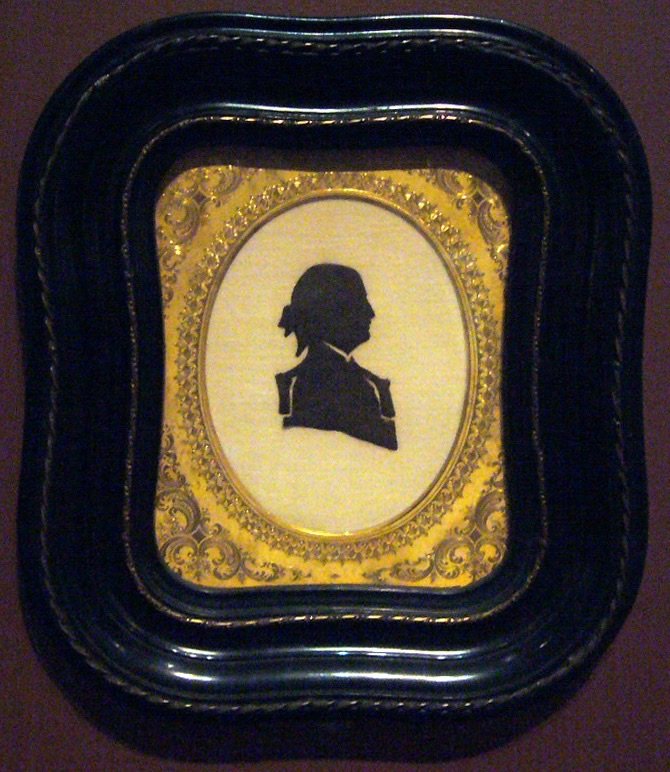
Lucy Meriwether Lewis Marks, John Toole 1835

Every family has tales of courage and great achievements. Mine is no different. But it’s interesting that everyone ignores the bad. If you spend time at a Thanksgiving with us, you will hear about my grandmother shooting the biggest bear in Colorado, how Rev. Henry Fry introduced the Emancipation Bill in Virginia in 1785, and how John Christian Bullitt created the city charter for Philadelphia. You won’t hear stories about Captain William Tucker‘s retaliation for the 1622 Jamestown Indian massacre. He negotiated a peace treaty and then poisoned the liquor at the treaty celebration. This killed about 200 Powhatan Indians. Nobody uses this as a nighttime story.

One of my favorite ancestors is Lucy Meriwether Lewis Marks.

Lucy was born in Albemarle County, Virginia in 1752. In his book Lewis and Clark: Partners in Discovery, John Bakeless, describes Lucy as “a Virginia lady of the patrician breed, a benevolent family autocrat, with a character so sharp and definite that her twentieth-century descendents still refer to her as Grandma Marks.” The stories, filtered down to me are about her intellect and undaunted courage. She owned a large library, which was unusual for a woman at that time. She was an herb doctor which was probably better than doctors who believed in “bleeding.”. And she was tough. Supposedly, during the Revolutionary War, she saved the plantation by wielding a rifle and driving away a party of drunken British soldiers. And, like my grandmother and her bear story, she was a great marks-woman. A tale often told is about a group of men who left Locus Hill on a deer hunt. They returned at the end of the day empty handed and exhausted. Fortunately, while they stalked the woods, Lucy shot a large buck in her front yard, and it was dressed and cooked when they returned.

Lucy’s life was filled with war, deaths, marriages, and scandal. Her son, Meriwether Lewis died, supposedly, from suicide. Until her death she maintained that he had been murdered. As an aside, most of the family continues to believe in the foul-play theory. John Hastings Marks, another son, died at a “retreat” for the mentally ill. Even after these deaths, and the deaths of her two husbands, Lucy continued to ride horseback, serve as an herb doctor, and run the farm. She was 85 when she died in 1837. Her stories have become part of the family yarn. Strangely, there are quite a few stories that involve women and guns. Hmmm.

Meriwether Lewis, Charles Wilson Peale

Lucy Meriwether Lewis Marks Family Tree

Grandma Janice Ann Booker Flint, 1918

Many thanks to Christine Adreae’s website on Lucy Merwiether Marks

Family tree courtesy of Robert H. Smith International Center for Jefferson Studies © 2009 Jefferson LibraryMonticello

The Post About a Book With a Super Long Title That Was Shortened to an Acronym That Also Has a Cool Design Using a Great Cut of Didot (Designed by Firmin Didot around 1784).

Wednesday, August 10th, 2011
Robert M. Smith, designer: 41ADNY62, cover

The 41st Annual of Advertising and Editorial Art & Design of the Art Director’s Club of New York is an incredibly long title. If I were faced with this, I would suggest making it longer by adding multiple adjectives as in, The Unbelievable 41st Annual of Glorious and Mind-blowing Advertising and Kick-Ass Editorial Art & Design of the Grooviest Art Director’s Club of the Center of the Universe, New York. But, clearly, the editor in 1962 did not have the foresight and genius to do this. So it was shortened to a simple acronym, 41ADNY62. Which is okay if you like to read license plates.

Title aside, the book design is sublime. I have worked on many book projects, only to realize that I am shamelessly appropriating from this annual. If I were smart I would simply steal the design, claim it as my own, and deny and wrong doing. One of my downfalls is, unfortunately, a commitment to ethics. So I admire the book, and design something of my own. If you have no ethics, here it is, in all its beautiful Firmin Didot-esque glory.

Robert M. Smith, designer: 41ADNY62, title spread

Robert M. Smith, designer: 41ADNY62, detail

Robert M. Smith, designer: 41ADNY62, chapter divider

Robert M. Smith, designer: 41ADNY62, interior

Robert M. Smith, designer: 41ADNY62, detail

Robert M. Smith, designer: 41ADNY62, slipcase

Yes, Master. I will do your bidding.

Monday, August 8th, 2011

Sean Adams

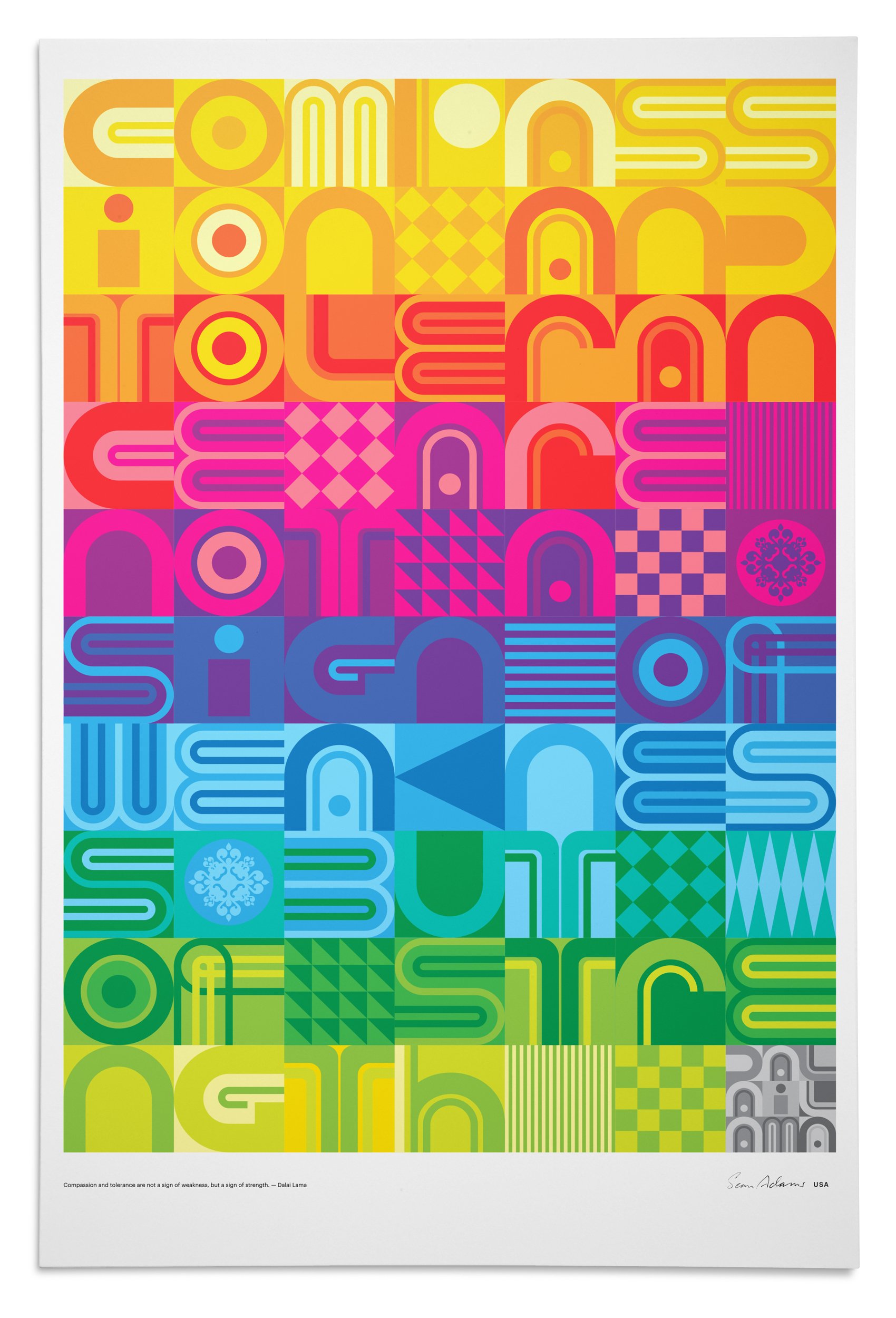
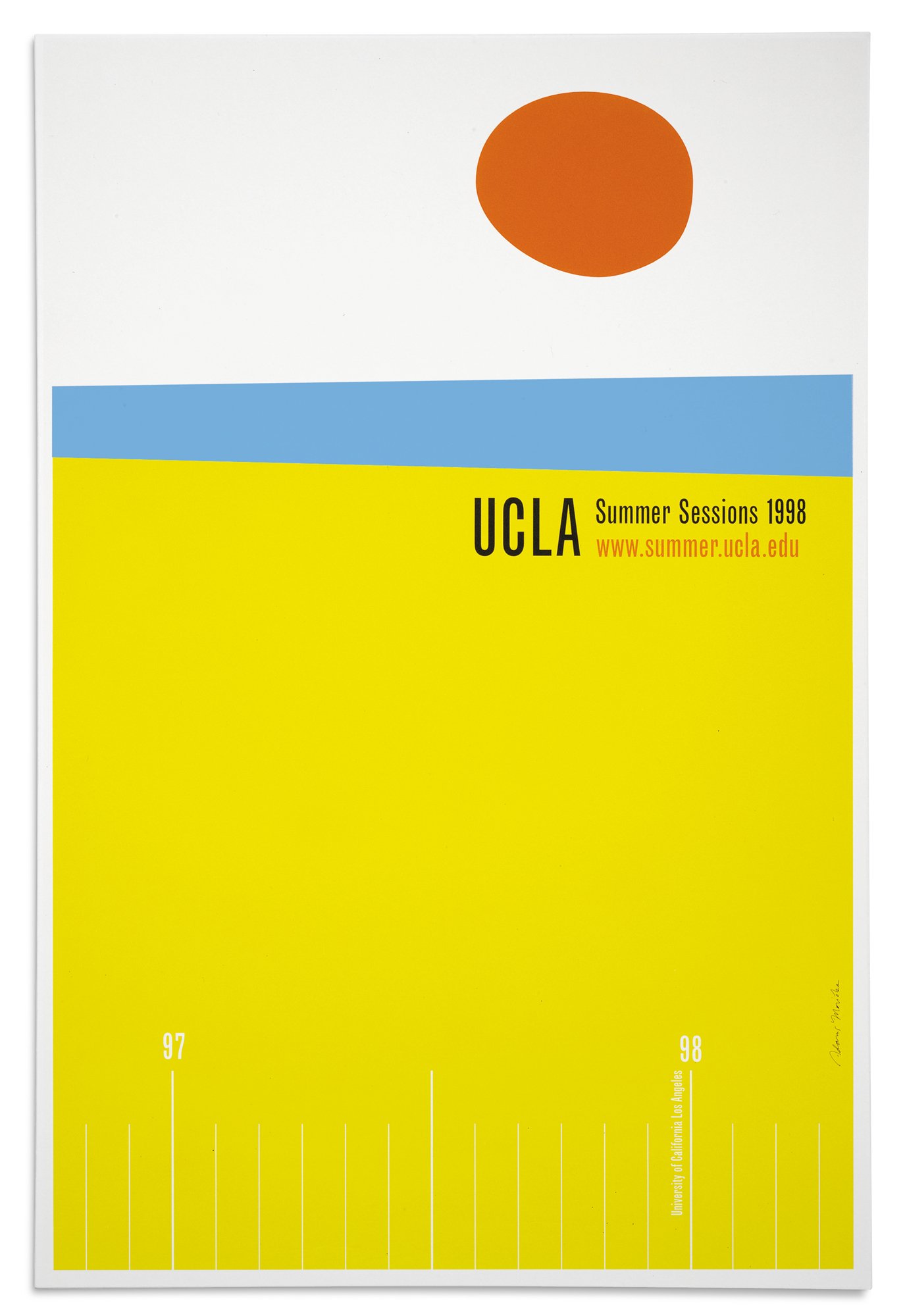
The UCLA Extension Masters of Design program was conceived and managed by InJu Sturgeon. InJu had the genius idea to elevate the utilitarian course catalogue covers working with some of the world’s best designers. Paul Rand designed the first cover in 1990. The program soon became the coveted assignment. Other designers including Saul Bass, Paula Scher, Woody Pirtle, Ivan Chermayeff, and Michael Bierut have tackled the same assignment: education, Los Angeles, the season, and extension. In 1998, we were honored to be asked to design our first cover. This was daunting, solving the same assignment as some of our heroes. Michael Vanderbyl was the encouraging voice for us, and convinced us to have fun. The series could easily have become a hodge-podge of crazed egos. But InJu’s remarkable skill handling designers consistently leads to some of the best work. When working with InJu, it is immediately clear that there is no room for diva-esque behavior. Hence my typical screaming, demanding, and abusive approach was not welcome. And I have never net anyone so adept at motivating me to do better.

Paul Rand

Noreen Morioka

Saul Bass

Michael Bierut

Sean Adams

Michael Vanderbyl

Noreen Morioka

Sean Adams

Ivan Chermayeff

Paula Scher

Woody Pirtle

Huki-huki-huki-huki-huki-hukilau

Wednesday, August 3rd, 2011

Hawaii's Greatest Hits, Best album design ever, 1968

A good friend of mine, the amazing designer Jim Cross, is a great aficionado of traditional Hawaiian music. Jim has impeccable taste. His taste in classic, authentic Hawaiian music is educated and refined. I, on the other hand, have plebian taste in many things. I’m just as happy at In-n-Out Burger as a 5 star steakhouse. My taste in Hawaiian music is no less low-end.

If you want to experience the truly relaxing Hawaiian sounds, check out Hawaii Calls. This was a program broadcast in front of the banyan tree at the Moana Hotel on Waikiki. On weekends, I tune the Pandora station to this and relax with rum based beverages. If you enjoy chanting, ukulele, drums, and the slack-key guitar (and who doesn’t), you’ll love this Hawaiian music. If you have a problem with the soothing sounds of the islands, buy the records for the covers alone. At least you will be anxious, mean, and angry while enjoying the album art.

Hawaii's Greatest Hits, liner notes, 1968

Lucien Hetu, Hawaiian Magic

Hawaii's Greatest Hits 2, 1979

Martin Denny, Hawaii, 1967

Elvis Presley, Blue Hawaii, 1962

Alfred Apaka, 1964

50 Guitars Visit Hawaii, 1962

Alfred Apaka's Greatest Hits, 1970

Aloha Hawaii, Lani McIntire, 1950

The Dead Parents Years

Monday, August 1st, 2011

For some odd reason that I have yet to understand, being a parent on television in the 1960s was life threatening. Perhaps it was a generation gap rejection of a paternal society, or a way to save money on actors, but there were a whole lot o’ dead parents on-air. Family Affair, which sounds suspicious at best, was about two incredibly sedated orphaned children. They lived with their “uncle” and his “butler” in a New York high-rise. I don’t know what happened to the parents, but the kids seemed well adjusted to their death, or didn’t care. And what’s with Mr. French, the butler?

The Courtship of Eddie’s Father was about Eddie’s life after his mother died, his dad, and their “house-keeper” Mrs. Livingston. That Mrs. Livingston seemed very submissive to Eddie’s father, if you catch my drift. My Three Sons was about three sons, Fred MacMurray and their “housekeeper” “uncle” Charlie. Their mother also was dead.  Once again, nobody ever mentioned her or was upset. It was like a Stephen King novel where everyone is keeping a dark secret.

Another example from a slightly earlier time is Bachelor Father. John Forsythe is niece Kelly’s uncle. After her parents are killed, she goes to live with her “uncle” and his “houseboy”, Peter. John Forsythe tries to keep Kelly out of trouble at Beverly Hills High.

In the end, there are a lot of dead parents, children who don’t care, and suspicious household “help.” Either the kids are complicit in the deaths, or they are cold and heartless. And the household help is there for “other” reasons that cannot be shown on-air.