

Archive for October, 2010

OMG, He’s Like Totally Dead

Monday, October 18th, 2010

At one point this weekend, I found myself watching part of the 1980s movie Less Than Zero. I had forgotten how truly awful it was. I remember when it was released; everyone I know said, “that was lame.” And it was. Okay, I was there in real life. Los Angeles, Beverly Hills, and Palm Springs in the early 80s were nothing like the movie. If those people showed up at a party wearing the terrible Miami Vice suits, they would be beaten. And the music? Yeah, we were all listening to heavy metal. No.

Now the movie that got it right is Valley Girl. I know it may sound crazy, and you may be saying, “Are you out of your mind?” But it’s a good movie. Really. The punks at the club in Hollywood were actual CalArts art students and real-life punks. The valley party happened at a friend’s house that really is in the Valley. The music was exactly right. Believe me, we were far more interested in listening to the Plimsouls than the faux heavy metal of Less Than Zero. And the clothes, beside the lead character’s hapless attempt at reality, were right. However, I will suggest watching Less Than Zero, just to see Jamie Gertz say, “OMG,” when Robert Downey, Jr.’s character dies (sorry for the spoiler).

The Age of Wonder

Thursday, October 14th, 2010

Sean: Reno, Nevada

When work is challenging, I wonder if it would have been easier if I had been born in Virginia in the 18th century. It seems to me that I would have it made regardless of my intelligence or abilities. If I wanted to be a senator or governor, I would simply need to tell my father or grandfather and it would happen. Then I remember that there was no indoor plumbing and you could die from a small cut. So it’s not a good idea. As it is, my family left Virginia, and I was born 200 years later.

I was born at exactly the right time and place to see remarkable motel signage. As many of you know, I was born in Reno, Nevada. The great thing about Reno is that it’s not as fancy as Las Vegas. It’s a small city at the base of the Sierras with great skiing, hiking, and the University of Nevada. When I was growing up it was still a cow town where cowboys would drive in on a Friday night and blow their paycheck. In the 1970s there was an attempt at making Reno more Vegas, but it didn’t take. I like that. The motel signs never became the neon extravaganza that could be found in Las Vegas. They relied on themes that now look rather depressing, such as a “circus/holiday” theme. I may not have been made a governor because I was related to the current one, but I have seen wonderful things, especially the Nevada Club logo: a little Nevada shaped cowboy.

Nevada Club: Reno, Nevada

Virginia Street: Reno, Nevada

Carousel Inn: Reno, Nevada

Oxford Motel: Reno, Nevada

Harold's Club: Reno, Nevada

Town House: Reno, Nevada

Star Dust Lodge: Reno, Nevada

Gold and Silver: Reno, Nevada

Nevada Club: Reno, Nevada

Golden Nugget Motor Lodge: Reno, Nevada

Yes, No, Yes, No, I Mean Maybe

Wednesday, October 13th, 2010

Tadanori Yokoo, Henry Miller

I’ll admit it; I’m contradictory. I’ve learned this is a good thing to say. I can get away with so many things. When I change my mind, I can say, “I know I said I like yellow, but now I want brown. I’m contradictory,” or, “I gave that Boardwalk Empire show a chance, today I decided it’s boring.” At a lecture a couple of weeks ago someone pointed out that although I talk about clarity and a modernist approach, some of our work had ornamentation. My response, “Well I’m contradictory.” See how well it works.

Consequently, I love Tadanori Yokoo’s work. Theoretically, it should be too complex, layered, and decorative, and I should only like John Massey. But, Yokoo endlessly inspires me. His work is related to psychadelia and the Fillmore tradition in spirit, but also has a unique approach to space. Like traditional Japanese prints, distance is visualized by the placement on the page, not a western 3-dimensional perspective. His work takes traditional elements and combines them with western iconography and popular culture. He doesn’t carefully and harmoniously combine these; they seem slammed together with remarkable energy. Don’t get me wrong, though, I also love John Massey. Why? Yes, you know.

Tadanori Yokoo, 1965

Tadanori Yokoo, 1965

Tadanori Yokoo, 1965

Tadanori Yokoo, 1967

Tadanori Yokoo, A Ballad Dedicated to the Small Finger Cutting Ceremony

Tadanori Yokoo, 1965

Tadanori Yokoo, 1968

John Massey, 1968

The Paper Trail

Friday, October 8th, 2010

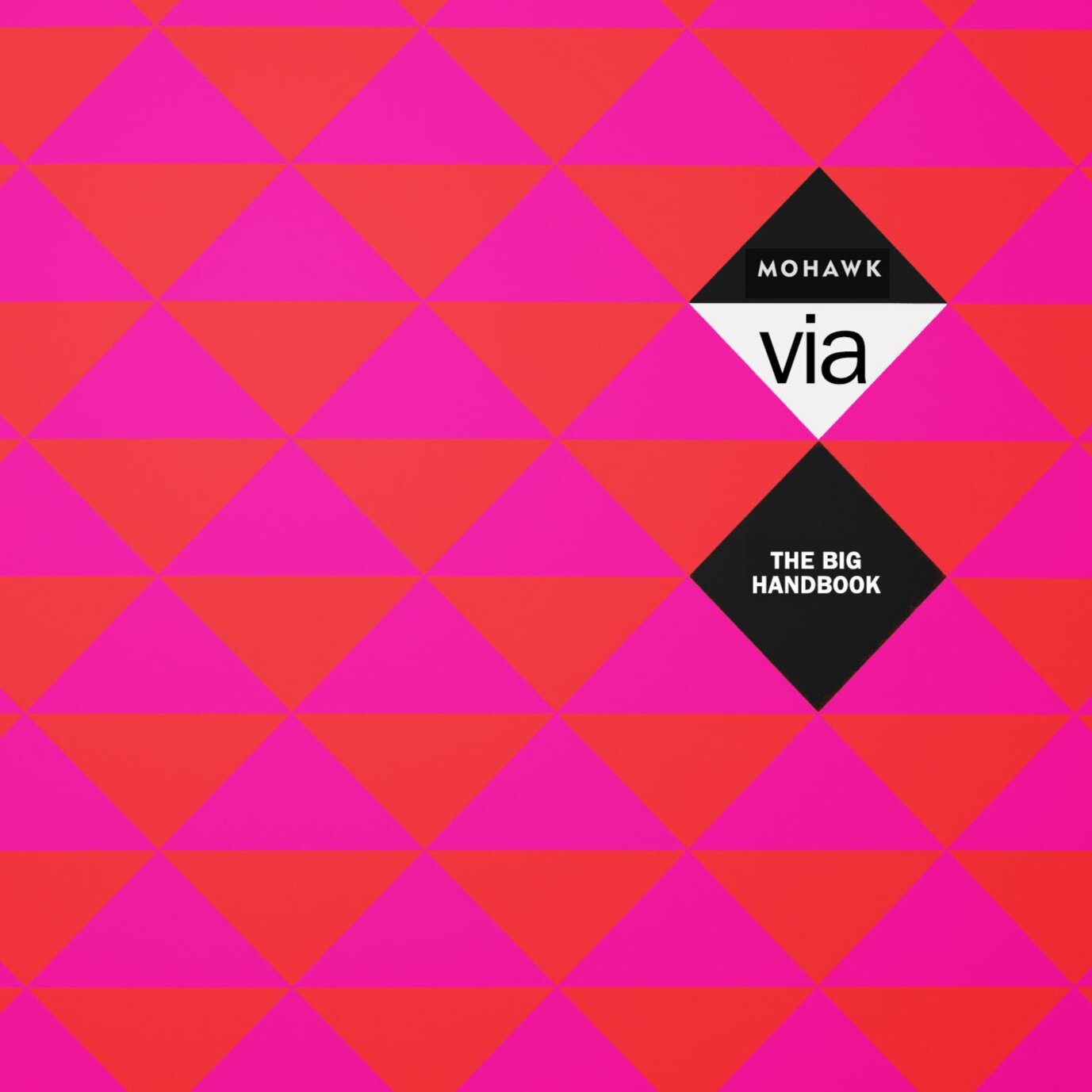
Mohawk Via Paper and Printing, final, cover

Paper promotions are the first items to be discarded every time I’ve judged a competition. The other judges typically say, “Well, they don’t count. You can do anything you want.” Oddly, that’s not true. There is a client with specific needs, audience goals, budgets, and logistical issues. So when the other judges say that I want to knock them up the side of the head. I will admit, however, that working on projects for Mohawk Via is my favorite activity. There are so may moving parts between the concept and technical issues. I need demonstrate multiple printing situations on multiple papers. The most recent project that will hit the streets in a few weeks, Mohawk Via Paper and Printing, used 20 forms, each with different inks. I love piecing it all together to take best advantage of the presses.

One of the reasons I love working on Via is Mohawk’s commitment to sustainable practices and education. The most important aspect in making something sustainable is to make something useful that will be kept. The Mohawk Via materials have always been educational. There are no fancy photos of a flower for no reason. They are textbooks on printing and paper.

Mohawk Via Paper and Printing started with the idea of making a satirical sex education manual, but about printing. It was a cute idea, but quickly became apparent that it was a one-liner joke. It was getting in the way of the purpose of the piece—to provide printing solutions and examples. Around the same time, I visited Virginia. I found a unique American point of view in the art, architecture, and design at Williamsburg, Monticello, and the Virginia Historical Society.

This American point of view: expansiveness, honesty, plain speaking, compassion, diversity, and courage tied in perfectly with the attributes of Mohawk Via. So the final piece moved in that direction. The sex ed manual might have been funny, but the Albert Bierstadt painting on the Via Smooth page is sublime. The final version will be in inventory on October 18th at mohawkpaperstore.com

Mohawk Via Paper and Printing, unused version 1 sex ed satire

Mohawk Via Paper and Printing, unused version 1 sex ed satire

Mohawk Via Paper and Printing, unused version 1 sex ed satire

Mohawk Via Paper and Printing, unused version 1 sex ed satire

Mohawk Via Paper and Printing, form planning

Mohawk Via Paper and Printing, final, spread

Mohawk Via Paper and Printing, final, spread

Mohawk Via Paper and Printing, final, spread

Mohawk Via Paper and Printing, final, spread

Mohawk Via Paper and Printing, final, spread

It’s a Wide, Wide World

Wednesday, October 6th, 2010

Cinerama Dome, Hollywood, California

The Cinerama Dome is an incredible movie theater in Hollywood. The screen curves at the front of the theater to create a “surround” experience. I recall seeing Vertigo there (the re-digitized re-release. I’m not that old), and sitting on the far left of the front row. The result was a bizarre and skewed Jimmy Stewart and Kim Novak. Now the Cinerama Dome is part of the Arclight complex. The Arclight makes other movie theaters seem like filthy places where old men are touching themselves. I especially like being able to reserve a specific seat. I hate sitting in the middle, and prefer an aisle—hence the skewed Jimmy Stewart.

Cinerama was created in the 1950s along with a host of other technologies that would draw the viewers away from television and back into the theater. It was sort of like 3d now. Sometimes this was nifty, as in Lawrence of Arabia, but the un-letterbox version broadcast on television created many odd scenes of people talking to no one. The logos for these technologies were often better than the movie. So here, for you viewing pleasure, are some of them.

VistaVision logo

CinemaScope logo

CinemaScope title card

CinemaScope 55 ad